
12 August 2026
What is sushi: origin, history and what really defines it
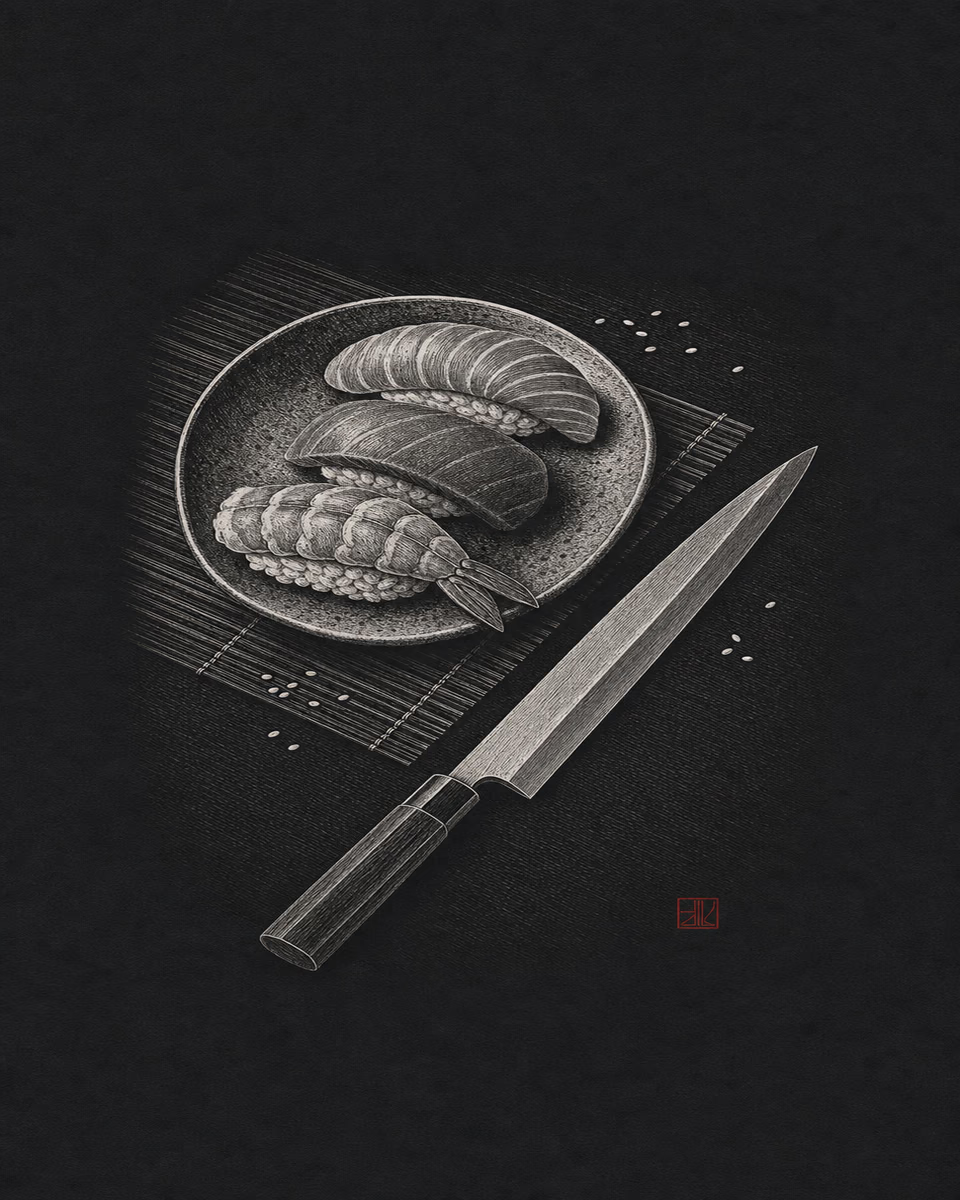
Sushi is, at its core, seasoned vinegared rice — what the Japanese call su-meshi — not raw fish. The word itself refers to rice dressed with vinegar, sugar and salt. Whatever sits on top or alongside it, whether tuna, salmon, omelette or vegetable, is the topping. Without that rice, there is no sushi.
What is sushi, exactly?
Here is the surprise that trips almost everyone up: sushi does not mean “raw fish.” That is sashimi, which is a different thing entirely. Sushi comes from su-meshi, “vinegared rice,” and that rice is the heart of the dish.
When you order a piece of nigiri, what makes it sushi is the hand-pressed mouthful of rice, dressed and served at the right temperature. The fish crowning it is the visible, flavourful part, yes, but technically it is the topping. That is why vegetarian sushi exists, along with sushi topped with omelette (tamago) and cooked shellfish: as long as there is vinegared rice, it is sushi.
The rice seasoning is no minor detail. The vinegar originally served to preserve, and today it lends that acidic counterpoint that balances the richness of the fish. Good sushi is judged as much by its rice as by its fish — something you notice straight away at the counter.
Another common confusion: sushi need not contain raw fish at all. Many of the best-loved pieces come with cooked, marinated or vegetable ingredients. The one non-negotiable, we insist, is that well-made vinegared rice. When someone says they “don’t like raw fish” but wants to try sushi, there is almost always an option for them.
Where does sushi come from?
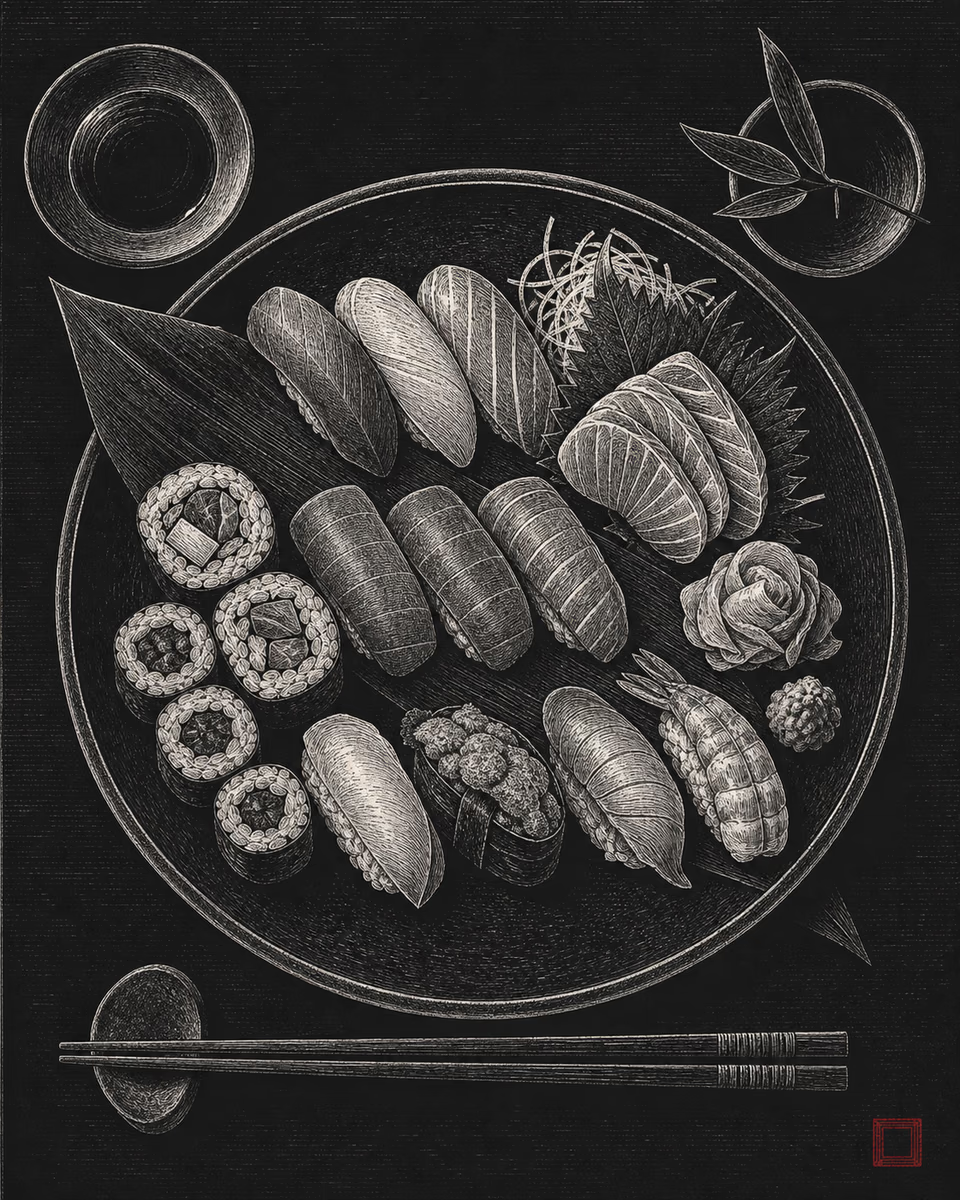
Sushi did not begin as we know it. Its ancestor is narezushi, a preservation technique from Southeast Asia that reached Japan centuries ago. Fish was packed with cooked rice and salt and left to ferment for months. The fermentation preserved the fish; the rice was discarded, since it only served as the medium for the process.
Over time, the Japanese shortened the fermentation and began eating the rice too. During the Edo period (17th to 19th centuries) came hayazushi, “fast sushi”: instead of waiting months for fermentation, the rice was vinegared directly to achieve that same sour taste in minutes.
The decisive leap came in 19th-century Tokyo. A cook named Hanaya Yohei is credited with the idea of serving fresh fish over a bite of vinegared rice, ready to eat on the spot. It was street food — fast and cheap: the nigiri we order at the counter today was born as the fast food of Edo.
That early nigiri was also considerably larger than today’s: it was split into two bites, which is why nigiri is still usually served in pairs. With modern refrigeration and better transport, sushi stopped being a preservation technique and became what it is now — a way to showcase the freshness of the fish, not to mask its absence.
When did sushi reach Spain and the Canary Islands?
In Spain sushi is relatively recent. It caught on through the 1990s and 2000s, first in the big cities and then across the country, until it became an everyday thing.
For a long time sushi was seen here as something exotic, reserved for special occasions or high-priced restaurants. That idea has gradually faded: today you find conveyor-style chains, home delivery and counters where the sushiman cuts in front of you all side by side. Each format has its audience, but they don’t all offer the same thing, and that is where the quality of the rice and the freshness of the fish make the difference.
The Canary Islands, moreover, have a particular relationship with Japan. For decades Las Palmas de Gran Canaria has had a Japanese community tied to the port and the tuna fleet, which has always brought Japanese culture and cuisine closer here. That history with the sea and with tuna explains why sushi fits the island so well: the raw ingredient is right on the doorstep.
It is worth dispelling a myth here: sushi is not necessarily expensive or ceremonious. It began as street food, and that spirit lives on at a good counter, where you can sit down, watch the sushiman work and order piece by piece. That direct contact with the person doing the cutting is, for us, the best way to discover sushi.
What types of sushi are there?
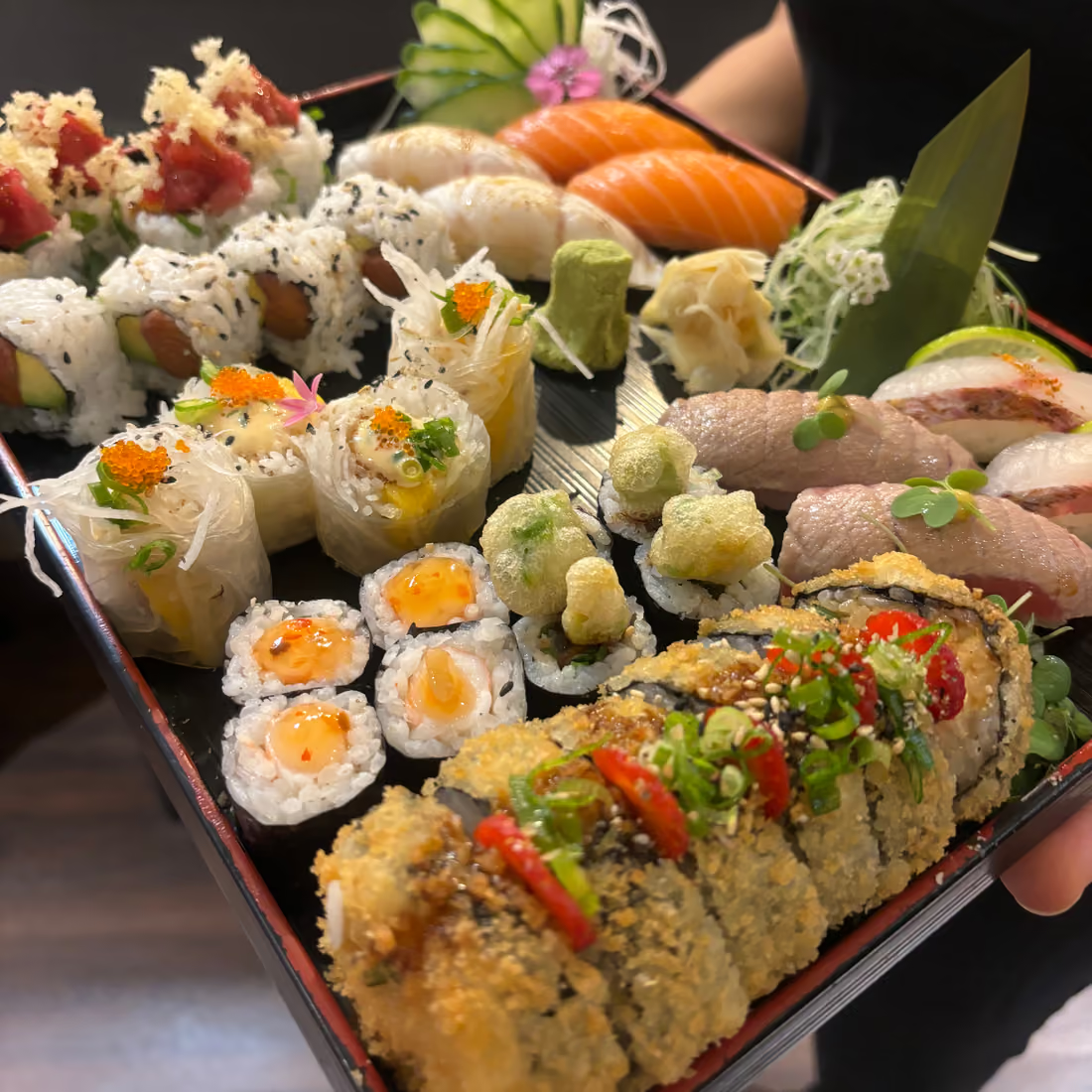
The word “sushi” covers many forms: nigiri (rice topped with fish), maki (rolls with the seaweed on the outside), uramaki (rice on the outside), temaki (the hand cone), gunkan and more. And then there is sashimi, which serves fish without rice and therefore is not technically sushi.
If you want to understand each format calmly and know which to order first, we explain it all in our complete guide to sushi types. It is the best way to arrive at the counter already knowing what you like.
Broadly speaking, the more rice and seaweed a piece has, the more of a “roll” it is; the more the fish takes centre stage, the closer it gets to nigiri or sashimi. But you needn’t memorise anything to enjoy it: just let yourself be guided at the counter.
Where to try it in Las Palmas?
At Hito, on Calle Galileo 4, a short walk from Playa de Las Canteras, we cut the sushi in full view at the counter. We work with whole Balfegó bluefin tuna, which we break down in-house, and from it come the nigiri, sashimi and tataki cut to order.
Our hours run for lunch and dinner, with the kitchen open until 16:00 at midday and until 23:00 in the evening; we close on Mondays, open only for dinner on Thursdays and only for lunch on Sundays. If you’d rather eat it at home, we also deliver across Las Palmas through Just Eat and Uber Eats.
If you are curious why tuna and Atlantic fish work so well in sushi, we have devoted a whole article to it: bluefin tuna and Atlantic fish in sushi. And when you want to try it, take a look at the menu or book a table at the counter. It is where you best understand what sushi really is.