
11 August 2026
How to make sushi rice: step-by-step su-meshi recipe

To make sushi rice you rinse Japanese short-grain rice until the water runs clear, cook it covered with an almost equal amount of water, let it rest, then season it with vinegar, sugar and salt while you fan it. The result, su-meshi, is the foundation of every good piece of sushi.
What rice is used for sushi?
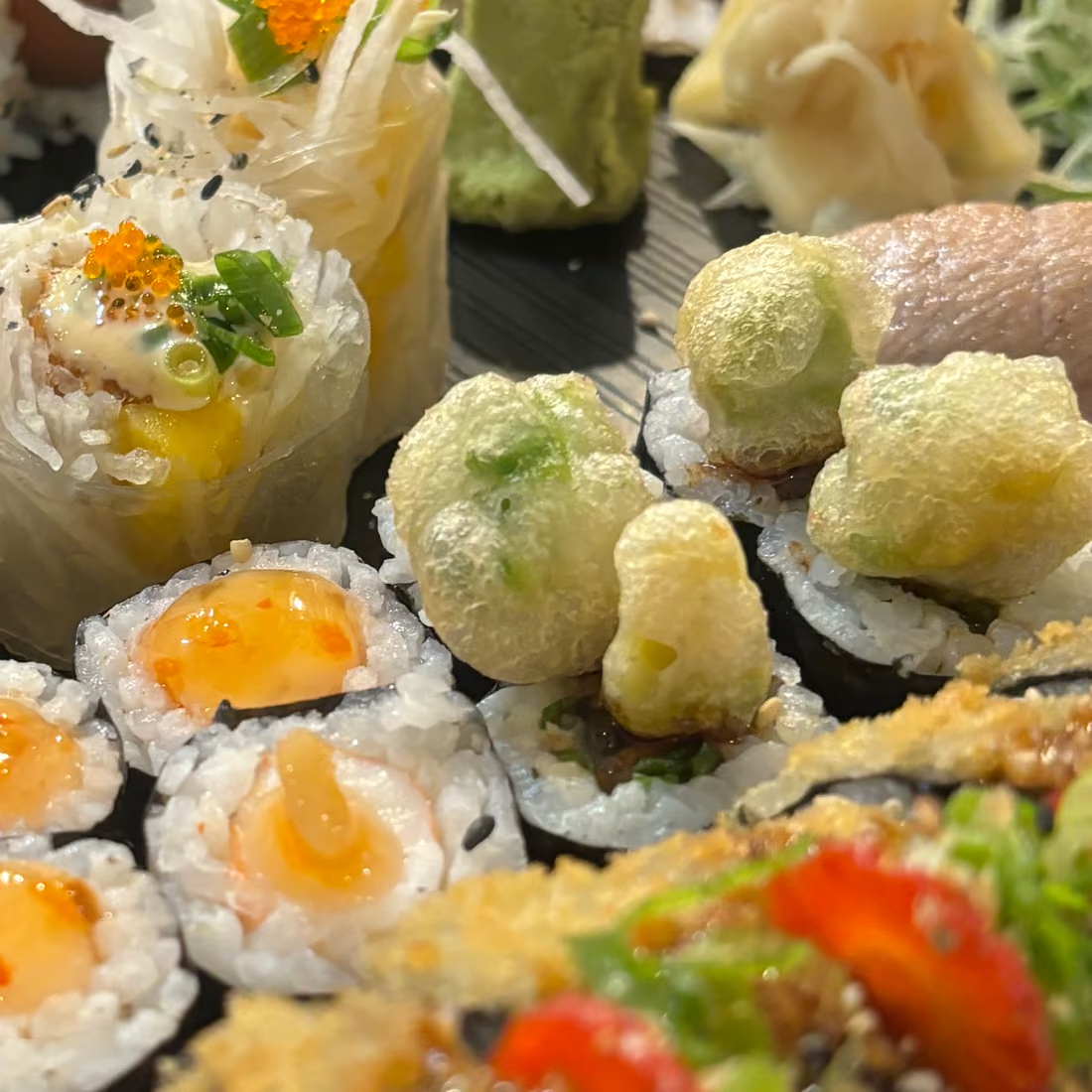
Sushi is made with Japanese short-grain rice, such as koshihikari. It is a starchy rice that turns sticky and glossy when cooked: the grains cling together without turning to mush, which is exactly what you need to shape a nigiri by hand or roll a maki that holds together.
Long-grain rice, like basmati, does the opposite. It is designed to stay loose, grain by grain, so it lacks the cohesion and silky texture of su-meshi. You can cook delicious basmati, but you cannot shape sushi with it: it falls out of your hands. When shopping, look for “sushi rice” or “Japanese short-grain rice” on the pack. It is the same world we explore in what is sushi: without this rice, there is no sushi.
One extra tip: quality Japanese rice usually comes polished and ready to rinse, but do not confuse Spanish “round rice” for paella with sushi rice. Round rice absorbs stock and breaks apart easily; Japanese rice is selected to withstand gentle handling and stay smooth. If round rice is all you can find, it works as a last resort, but you will notice the difference in the shine and in how well the piece holds together.
Ingredients and ratios
These quantities make 4 servings, about 660 g of seasoned rice. Prep 20 minutes, cook 20 minutes.
- 300 g Japanese short-grain rice (koshihikari or similar)
- 330 ml cold water
- 60 ml rice vinegar
- 30 g sugar
- 6 g salt
The key ratio is almost 1:1 by volume between rice and water (here, 300 g of rice with 330 ml). The seasoning keeps its own logic: for every 60 ml of vinegar, 30 g of sugar and 6 g of salt, meaning half as much sugar as vinegar and a generous pinch of salt. If you double the recipe, double everything equally and it will not fail.
Why those amounts and not others? The sugar is not there to sweeten the rice, but to round off the vinegar’s acidity and give that gentle note that balances the fish. The salt lifts and preserves the flavour. Too much vinegar and the rice tastes sharp and harsh; too little and it turns flat, clearly missing something. These ratios are a reliable starting point; with practice you can nudge them half a gram up or down to your taste.
How to make sushi rice step by step?
- Rinse the rice in cold water, stirring with your hand and changing the water, until it runs almost clear (4–6 rinses).
- Drain well and cook it covered with the 330 ml of water: bring to a boil, lower to the minimum and cook for 12 minutes without lifting the lid.
- Take it off the heat and let it rest, still covered, for 10 minutes.
- Warm the vinegar with the sugar and salt until dissolved, without letting it boil.
- Tip the rice into a wide bowl and pour the seasoning in a thin stream over the spatula, folding it in with gentle cutting strokes.
- Fan the rice as you fold until it turns glossy and reaches body temperature.
That fanning is not a whim: it evaporates surface moisture and sets the shine, and it cools the rice without overcooking the grain. Once the rice is warm to the touch, it is ready to shape into any of the types of sushi you like.
A note on the bowl: the traditional vessel is a hangiri, a wide cypress-wood tub that absorbs excess moisture. You do not need to buy one; a wide glass or ceramic dish works just as well. What matters is that the rice sits in a thin layer, with room for the seasoning to reach every grain and for the steam to escape. In a narrow, deep pot the rice at the bottom clumps and the rice on top dries out.
Common mistakes when making sushi rice
- Mixing too hard. If you stir as though whisking, you break the grains and the rice turns to paste. Use gentle cutting strokes with the spatula, separating and airing the rice, never crushing it.
- Putting hot rice with the fish. Freshly cooked rice is scalding; on top of it, the fish starts to “cook” and loses its texture. Always work with rice at body temperature.
- Using the wrong vinegar. Rice vinegar is mild and slightly sweet. A wine or cider vinegar overpowers the flavour and ruins the balance of the su-meshi.
- Skipping the fanning. Without fanning, the rice ends up clumpy and dull. That step is what gives it the shine and its characteristic bite.
- Making it hours ahead. Su-meshi has a short life. Refrigerated, it hardens and loses its aroma; ideally you season it and use it in the same session.
What if you’d rather have it made for you?
Let’s be honest: rice is 80% of sushi. The fish matters, but poorly cooked or badly seasoned su-meshi ruins the finest cut of tuna. That is why at the counter we cook and season it per service, so it reaches your plate at exactly the right temperature and shine, never straight from the fridge.
It is the invisible detail that separates good sushi from mediocre sushi: each batch of rice is timed to the hours of service, kept warm and shaped piece by piece the moment you are about to eat it. That temperature control cannot be improvised at home with a single pot, and it is exactly what you taste in the texture when the nigiri melts in your mouth instead of sitting there as a dense clump.
If you fancy practising at home, go ahead: this recipe works. And if you’d rather skip the rinsing and the fanning, book a table and let the rice be our problem.